
Introducing Foreign Models for Development
Japanese Experience and Cooperation in the Age of New Technology
JICA Chair Programme — Mauritius
Mauritius is at a pivotal moment in its economic journey. While the country has shown considerable resilience in navigating successive global challenges, sustaining long-term growth will depend less on traditional drivers and more on a decisive and sustained improvement in productivity.
The Government has set in motion a range of bold reforms — spanning competitiveness, digitalisation, innovation, public sector modernisation, skills development and industrial upgrading. These are meaningful steps toward economic transformation. Yet they remain largely siloed within their respective sectors, without the cohesion of a shared national productivity agenda to bind them together.
The JICA Chair Programme addresses precisely this gap. Rooted in Japan’s rich experience and informed by global best practice, it offers a dedicated platform for knowledge exchange — bringing together policymakers, practitioners and other key stakeholders to deepen their understanding of productivity, its drivers, and the conditions that enable it to flourish.
Through a blend of lectures, open dialogue and collaborative learning, the programme seeks to build a common knowledge base, strengthen the capacity of participants, and spark a broader national conversation on how productivity can be elevated across all sectors of the economy. In doing so, it will lay stronger intellectual and institutional foundations for Mauritius’ continued journey toward sustainable economic transformation.
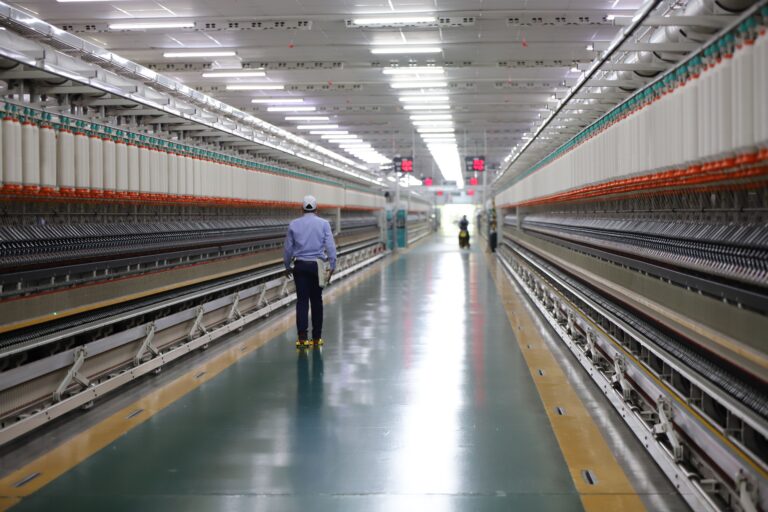
Few countries in the world offer a more powerful illustration of what productivity can do for a nation than Japan. In the aftermath of the Second World War, Japan did not simply rebuild its economy — it reimagined it, placing productivity at the heart of a national movement anchored in visionary leadership, strong institutions, and a remarkable spirit of collaboration among government, industry, labour and academia. Through philosophies and practices such as Kaizen, quality management and continuous improvement, productivity became the engine of Japan’s rise to global competitiveness and a defining feature of its economic identity.
The JICA Chair Programme gives Mauritius a rare and direct window into this experience. Rather than treating Japan’s story as a historical case study, the programme uses it as a living source of inspiration — a springboard for reflecting on how Mauritius can design and implement its own national productivity agenda, one that is firmly grounded in the country’s economic realities, institutional context and long-term development ambitions.
By convening policymakers, private sector leaders, academics, development partners and other key stakeholders around a shared table, the programme creates the conditions for a genuine national dialogue — one that builds a common understanding of productivity’s role in driving sustainable and inclusive growth, while opening space for frank exchanges on national priorities, sector-specific challenges and opportunities for collaboration. It is, in essence, an invitation for Mauritius to chart its own productivity story.
Drawing on Prof. Izumi Ohno’s decades of experience — including her leadership of industrial policy dialogue — together with her scholarly expertise and the themes emphasised in her published work, the programme will feature lectures on the following:
- framing productivity as a guiding principle of national development — understood not as a technical or managerial concept, but as an organising idea for the quality and competitiveness of a nation’s growth;
- the underlying methodology of industrial policy — distilling from Japan’s and Asia’s experience the ways of thinking and approaches to policymaking, rather than transferable models or success stories;
- the principle of translative adaptation — the conviction that development is realised not by adopting foreign models, but by selectively learning, critically examining, and internalising them within one’s own context;
- dialogue and shared understanding — the public–private cooperation and consensus on which a collective productivity agenda depends, as demonstrated through Prof. Ohno’s practice of policy dialogue;
- ownership and a change of mindset — so that development is driven by a country’s own initiative and self-help efforts rather than externally prescribed solutions;
- the gradual building of capability — development as a dynamic, phased process of learning across firms, sectors, and government; and
- the foundations for homegrown development — the relationships and shared understanding from which a country can shape, institutionalise, and in time share its own path.
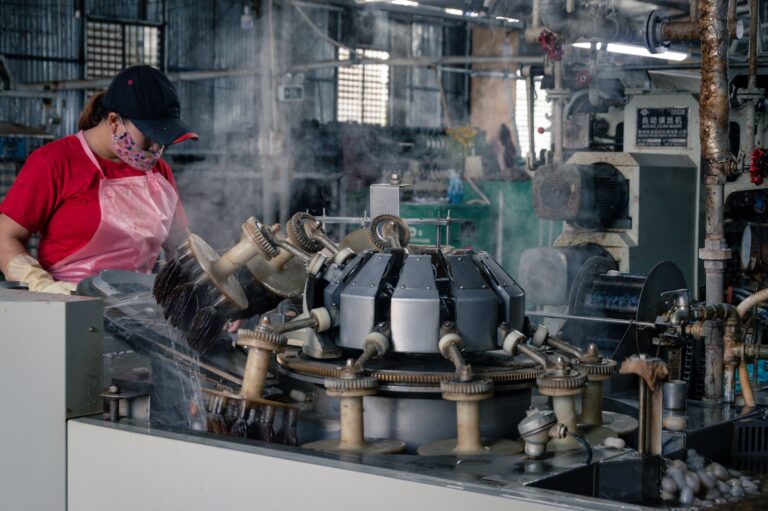
The programme features two keynote lectures delivered by distinguished speakers whose expertise spans international development, productivity policy and the Mauritian economic landscape.
Keynote Lecture by Prof. Izumi Ohno
-From shop-floor to nation: how Japan’s postwar productivity movement (the Japan Productivity Center, tripartite labour–management–government cooperation, and the “Three Guiding Principles of the Productivity Movement”) elevated shop-floor Kaizen into a national movement;
-Productivity as policy methodology: viewing productivity improvement as a framework for industrial policy — learning the ways of thinking behind policymaking rather than imitating success stories;
-Experience sharing from practice: (a) policy dialogue at the leadership level; (b) Kaizen from pilot to institutionalisation; and (c) ownership and mindset change;
-What this means for Mauritius: a middle-income, service-based, small island state — precisely why translative adaptation, not transplantation, is required.
Keynote Lecture by Dr. Vinaye Ancharaz — The Role of the NPCC in Enhancing Productivity in Mauritius
-The NPCC’s mandate, and the achievements and limits of productivity and competitiveness efforts to date;
-The state of productivity in Mauritius (slowing labour-productivity growth, the productivity paradox, skills mismatches, and concerns about the middle-income trap);
-How the NPCC, as a catalyst and convener, can bring together the public and private sectors and labour;
-Which lessons from Japan and Asia can Mauritius translative adapt?